
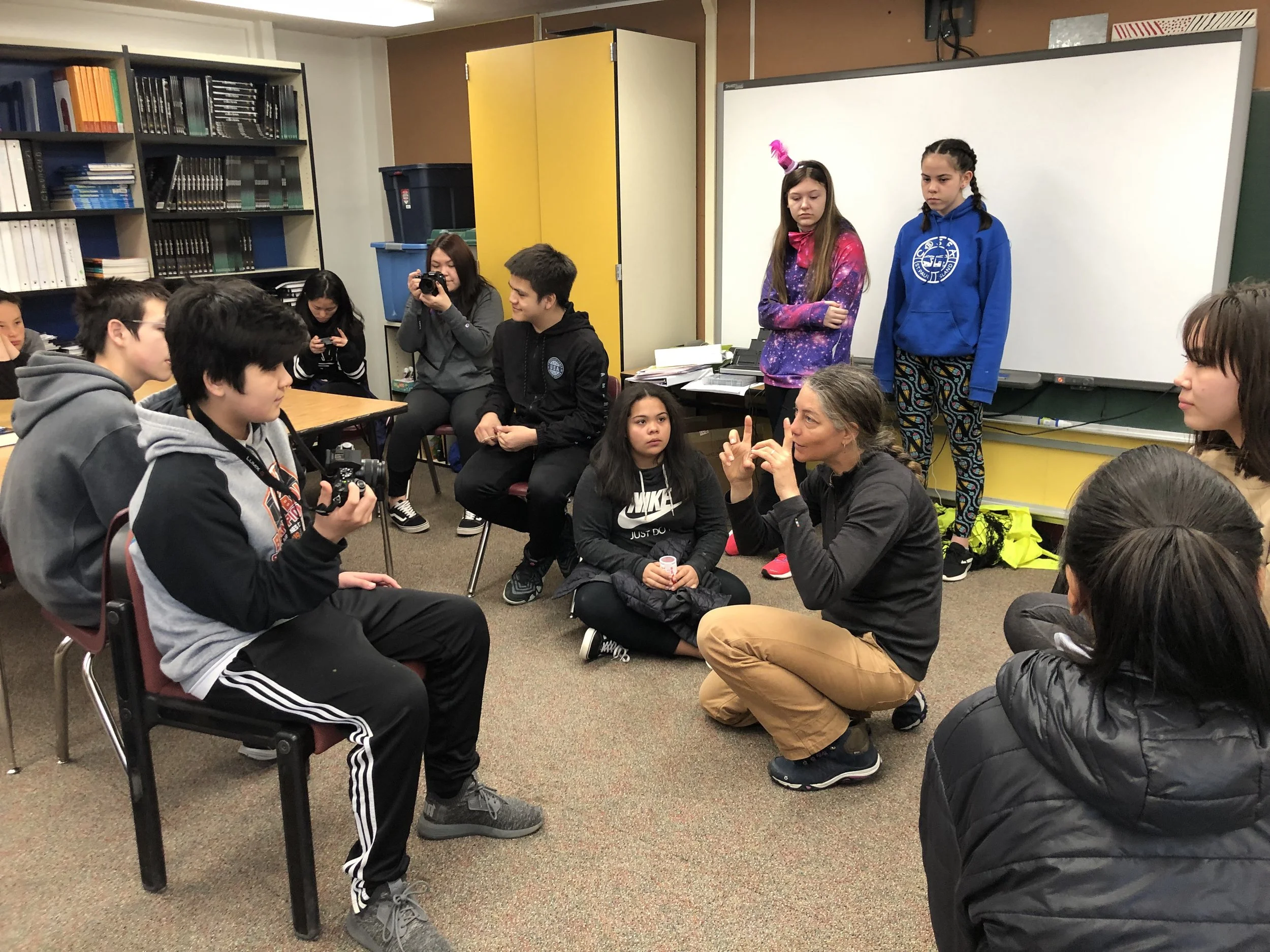
At OMI, we take ocean education seriously.
Building ocean literacy, storytelling capability and science communication skills is at the heart of our mission.
SCIENCE COMMUNICATION AND PROFESSIONAL DEVELOPMENT
-
How do you whip science into a compelling story? When it comes to reaching a general audience in an impactful way, the facts alone won't cut it. But good science can make for great narratives that do more than just inform -- they can inspire. Potent science storytelling requires strategy and involves a range of creative choices about narrative, structure, point of view, style, and more. This workshop explores the story devices that work to draw audiences into an experience, and build sound proficiency in the art of telling creative and potent scientific stories that brim with action, emotion and life.
-
In this interactive session, we go behind the scenes with OMI's award-winning producers to candidly explore what scientists want and need to know when working with the media. From studio and radio interviews to multi-day field productions, we will share tips and techniques for best navigating the process, covering what to expect regarding roles and responsibilities of both crew and talent including safeguarding your science, time-commitment, creative control, ethics and more.
-
In this hands-on workshop, we'll teach the tricks of the trade for producing professional-looking science videos using a smartphone. Participants will learn how to compose shots, craft scenes, achieve best lighting and audio, and more. We'll also demo low-cost accessories and gadgets to trick-out your phone and turn it into a powerful filmmaking tool!
-
No matter which side of the camera or mic you find yourself on, interviews can be a nerve-wracking experience. This workshop is designed to ease the exchange between scientist and media producer by teaching the "rules of engagement." Through practical exercises and role-play, we'll share strategic techniques for establishing trust between interviewer and interviewee. From exploring how to best frame questions that elicit dynamic and informative responses, to delivering compelling answers that protect you from being misquoted, to what body language can convey to an audience, you will learn all you need to know about getting and giving the best interviews so that you can communicate the story of the science with confidence.
-
How do you spin a scientific idea into a compelling story that not only informs, but inspires? No matter how important your research may be, when it comes to reaching an audience in an impactful way, the facts alone won't cut it. This seminar helps you to hone your message for a specific audience so that is personal and powerful; relatable and relevant.
-
We all know what it means to “hit the wall” at times. Whether in our research, our practice, or our writing and comms, feeling “blocked” can leave us frustrated, stressed and unmotivated. This multi-day retreat is an opportunity to come together and hit reset in a beautiful, safe and welcoming environment, unlock our creativity and bust through those blocks. Through artwork, writing, movement and meditation, we will explore a variety of exercises to flex the creative muscle, reshape our mindset and move our projects from that place of stagnation to activation.
NOTE: This can also be tailored to a half-day workshop.
-
Get the jitters when you have to present? This fun and interactive workshop will help you to build confidence, own your argument and engage your audience. Through improv exercises, role-playing activities, and other tried-and-true methods of structuring and delivering your presentation, you will learn to control your narrative and engage the audience.
-
If the story is the heart of science communication, the character is the heart of the story --
whether they are heroes or villains, human or non. They are what draws us in, drives our
emotional connection, and roots us to the story. But who/what makes a good character? Are all
experts, hosts, and presenters automatically characters? Through a series of exercises, we'll explore how to develop meaningful and memorable characters and examine the storyteller's role and responsibility in “creating” them.
-
In this workshop, participants will learn the nuts and bolts of creating a powerful science podcast. From writing for the ear, to directing narration, to building a foley box, to crafting “soundscapes” and music beds, participants will glean sound techniques to expertly produce a science podcast of their own.
-
Humor is the great unifier. It breaks down barriers, eases tension and draws people in . . . that is, if it's done right! This interactive workshop explores how to have some fun with your science while examining the difference between funny, jokey and total groaners.
-
Through this internship program, we partner with scientific institutions and organizations around the globe to send emerging filmmakers, photojournalists, and artists on expeditions with marine scientists and explorers to produce strong, visual narratives about the cutting-edge research that’s being done in the field. From our planet’s deepest ocean trenches to its highest seamounts, to the ever-expanding continents of plastics beneath the surface, our Ocean Media Explorers have the unique opportunity to "go deep” with the world’s leading science teams to capture the incredible stories of their critical work.
FOR COMMUNITIES
-
Throughout the Pacific, the power of storytelling both cements and catalyses our relationship with the world around us. When it comes to ocean and climate science, there is no one-size-fits-all approach to the way we shape and share those stories. The Moana Media Lab is a collective science-storytelling hub that builds science literacy by amplifying the voices and perspectives across Oceania. Through kōrero, talanoa and digital media training, we engage participants in science and storytelling through the lens of culture, so that it is relatable, meaningful and impactful.
-
In coastal regions around the world, environmental health is interlaced with community health, and when one erodes, so does the other. In recent years, marine debris resulting from plastics and by-products of the fishing and seafood industries have become major threats to delicate ecosystems and to the people and wildlife that inhabit them. From the Bering Sea to the Baja Peninsula, “Pollution to Solution” focuses on the oft-overlooked coastal communities on the frontlines of battle with marine debris and empowers citizen-scientists to design persuasive media campaigns and community action projects to address marine pollution in their area. By amplifying local voices as the most influential agents of change in one community at a time, we are building a wave of long-term positive impact.
FOR YOUTH
-
Through this ocean-focused youth leadership program, participants build practical teamwork and leadership skills by working on real ocean and climate challenges, learning to listen, facilitate discussions, plan projects and make decisions collectively. This can be delivered as a weekend course, a 5-day intensive, or a six-to-eight-week program that includes a group challenge. Adaptable for schools, youth groups or community organizations.
-
The ocean impacts our lives no matter where we live, from coastline to ridgeline. This program engages middle-school students from mountain and land-locked regions in fun ocean literacy activities, ocean-leadership workshops and community action plans -- all while exploring the connections between mountain, forest, river valley, and sea.
-
Science storytelling workshops just for kids. From filmmaking and photo workshops to mentorship and full media labs, we help kids tap into their creativity and build agency by providing skills to develop their voice and vision. Scaled to any age range.
Want to learn more?
For more info about these and other programs, get in touch! We are happy to custom-design something just for your group.